
SoundWall
A music studio you play like an instrument. Carry an idea from the first loop to a finished mixdown without leaving the room.
Some music software makes you feel like an engineer. SoundWall makes you feel like a player.
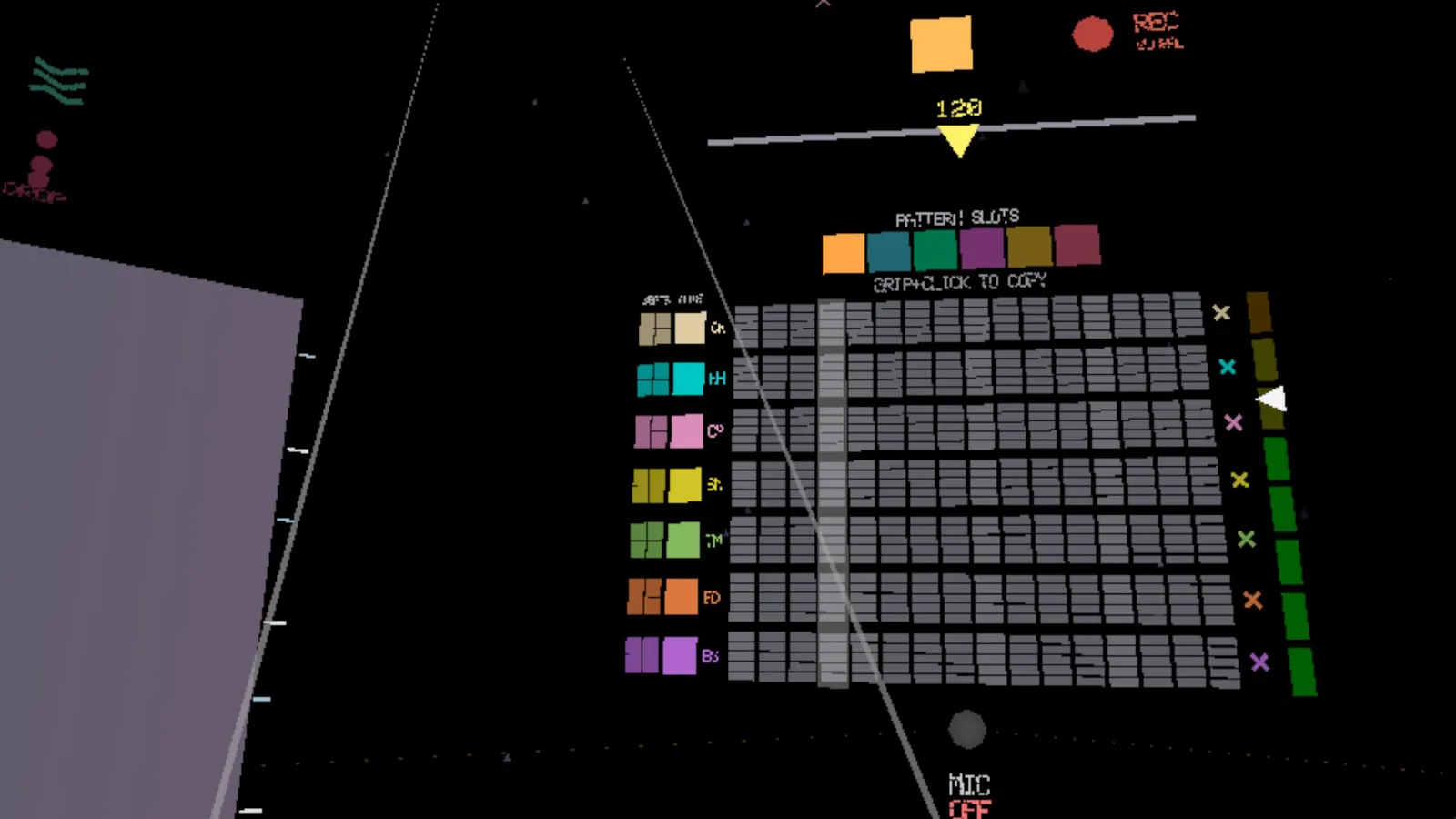
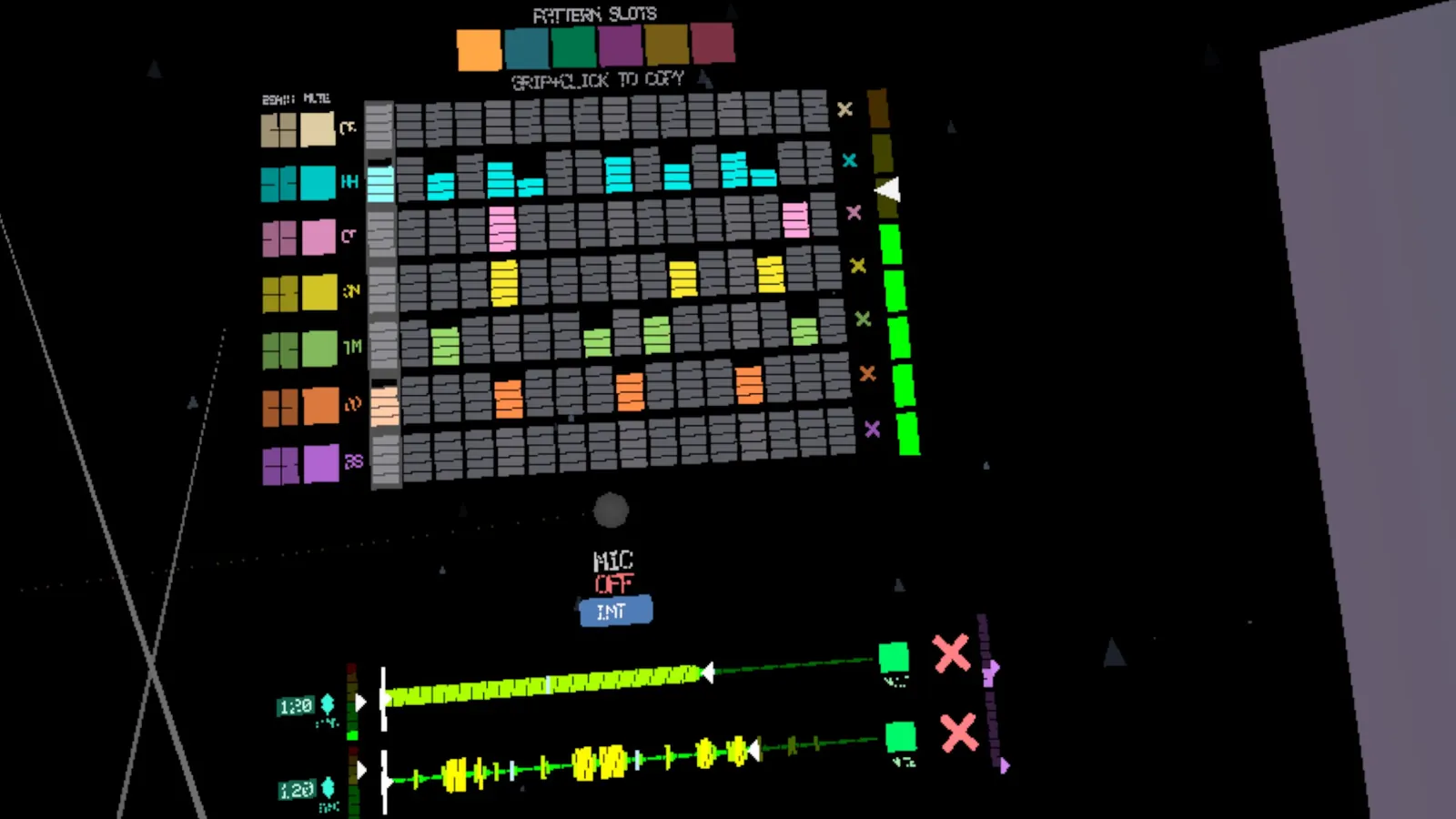
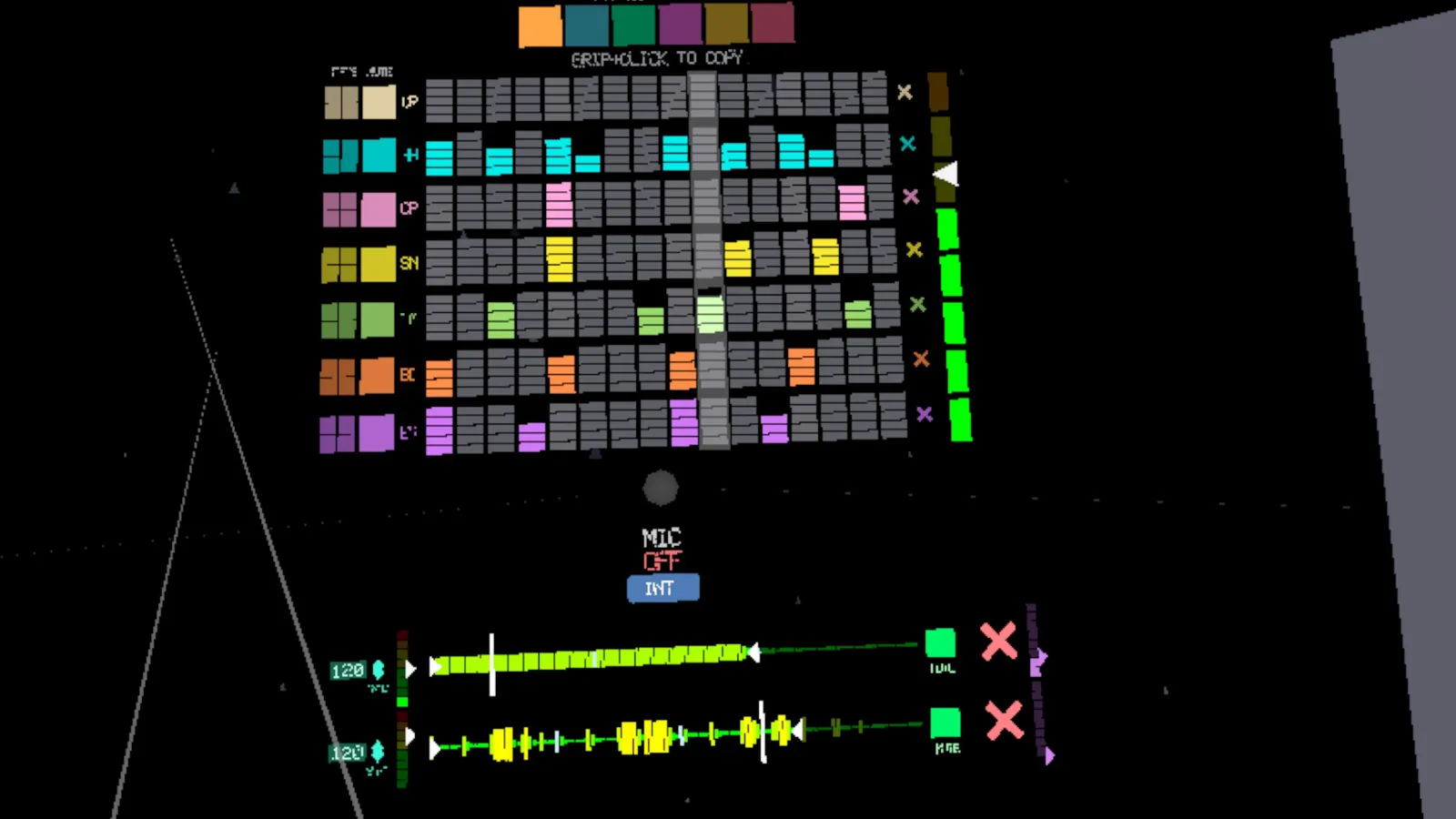
It's a small studio floating around you in neon — a step sequencer you punch patterns into, a drum kit you reach out and hit, samplers, four tracks to layer up, and a mixdown at the end. All of it in arm's reach.
The honest test: I lose hours in here every time I put the headset on to check a bug fix.
What's inside
- Seven-voice drum sequencer — 16 steps, with pattern slots
- A drum kit arced around you, played by hand
- Four tracks of audio recording, looping and chaining
- Samplers and synth voices on a tempo-locked clock
- USB MIDI keyboard support with mapping and a live MIDI log
- Mic input — sing or record straight into a track or sampler
- Save, reload and mix down to a WAV in your headset's Music folder
What it isn't
Not Logic or Ableton in VR, and not trying to be. There are full DAWs on Quest if that's what you need.
No plugins, no waveform surgery, no MIDI import or export yet, and four tracks rather than unlimited. This is an instrument first and a studio second. That's the point — and naming it plainly is the fastest way to make sure you buy the right thing.
Hardware
It all plays with just your controllers. A USB MIDI keyboard adds a panel with mapping and a live MIDI log — the same synth plays off the walls without one. A USB mic lets you record external instruments, which the built-in mic can't.
Tested with the Akai MPK Mini, Roland A-49 and UMIK-1.
Requirements
- Headset
- Meta Quest 2, Quest Pro, Quest 3, Quest 3S
- Play area
- Standing or seated
- Optional
- USB MIDI keyboard, USB microphone
- Network
- Not required — SoundWall works entirely offline
Tell me what you built
One developer, and I read everything. Ideas, bugs, or "how do I do this?" — hello@rabbitholesolutions.ca.